


Taser Prank: Electric Stun Gun
3.41.00 Reviews
App Specs
- Version
- 1.0
- Updated On
- License
- Free
- Downloads
- 100,000+
- Developer
- Era Global Publishing
- Categories
- Lifestyle
- Platform
- Android
Screenshots
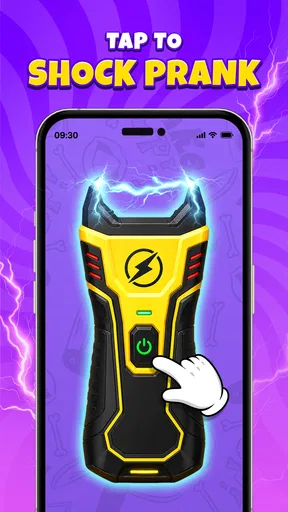
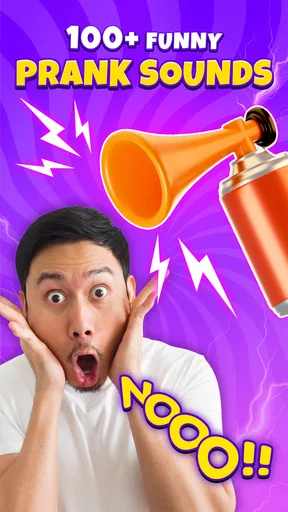
 Analysis by AppCompare
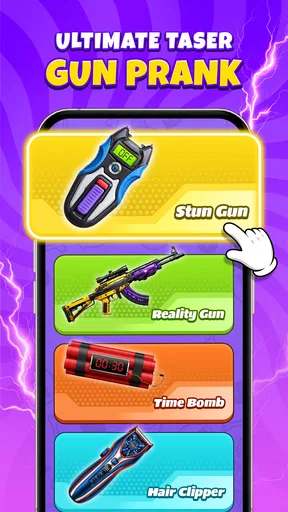
I tried Taser Prank: Electric Stun Gun as a lightweight lifestyle app built around playful sound effects and visual prank scenarios. Its central idea is simple: turn a phone into a source of surprise using taser, stun-gun, time-bomb, haircut, and other sound-based effects. That makes it very different from a practical lifestyle tool. It is closer to a pocket soundboard for harmless jokes, provided everyone involved is comfortable with the joke.
The app is free, aimed at Everyone, and comes from Era Global Publishing. It is listed as version 1.0, works from Android 7.0 onward, and has passed the 100K-install mark. Its average score is 3.5 from roughly 88 ratings, so I would describe its reception as mixed but sufficient to show that people are finding and trying it. I would not install it expecting a polished utility or a deep game. I would install it for quick, casual entertainment.
How the app feels to read and navigate
The first thing I noticed is that this kind of app depends heavily on immediate recognition. A prank soundboard only works when I can identify the effect quickly, select it without hesitation, and return to the main choices without getting lost. The concept is naturally easy to understand because the sound themes are familiar: a taser-style effect suggests one kind of joke, a haircut effect another, and a time-bomb effect creates a different mood.
That simplicity is useful for people who do not want to learn a complicated interface. Someone can open it, scan the available choices, and understand the purpose without reading a manual. In my experience, this is more important here than a long explanation. A prank loses its timing when the person holding the phone is still searching through menus.
At the same time, soundboard apps can become visually tiring if many choices are presented with similar labels or repeated design elements. I recommend taking a moment to identify the effects you actually intend to use before starting a joke. That small preparation makes the interaction smoother and avoids repeatedly tapping options while other people are waiting.
For readers who rely on larger text, strong contrast, or screen magnification, the practical experience may depend on the phone’s own display settings and how the app presents its controls. I found the basic concept approachable, but I would not treat it as a specialist accessibility tool. Its appeal comes from quick visual and audio feedback, not from a carefully documented set of inclusive navigation features.
One helpful habit is to hold the phone in a stable position before selecting an effect. That reduces accidental taps and makes it easier to keep attention on the people around you. It also matters if you are using the app in a bright room, outdoors, or while moving between conversations, because a prank interface is less useful when the screen is difficult to read.
Worth Reading Before You Choose

Flipboard Shows What News Apps Must Do Beyond the Feed

Switching to Android Auto Means Rethinking Your Driving Routine

Google Calendar Makes a Crowded Week Easier to Manage

Ludo King Makes the Most of the Minutes Between Plans

Baby Panda World Brings Quick Play to Modern Phones, but Its Game Library Feels Busy

ESPN’s Live Game View Makes Following Close Games Easier
What the sound-based design means for different users
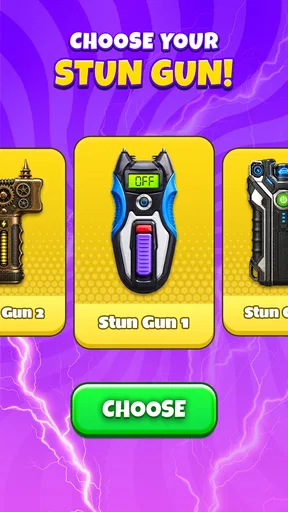
The strongest part of the experience is the way a single selection can create an immediate reaction. People who enjoy audio jokes may find that more engaging than a static image or a written gag. The collection of more than 100 sounds gives the app enough variety for short sessions, especially when several people take turns choosing effects.
That same strength creates an important limitation. Anyone who is sensitive to sudden loud noises, vibrations, or startling effects may find the app unpleasant rather than funny. I would never use it near someone who has not agreed to the joke, and I would avoid using it around babies, sleeping people, animals, or anyone who could react suddenly and fall or drop something.
For users with hearing loss, the app’s main appeal may be reduced if the experience depends primarily on recognizing audio. Visual context can help, but I would not assume that every effect communicates equally well without sound. A considerate user can show the phone first, explain the intended joke, and choose a calmer effect rather than relying on surprise.
Users with limited fine-motor control may also want to prepare the app before handing the phone over. Rapid tapping, holding the device at an awkward angle, or trying to trigger an effect discreetly can be frustrating. The better approach is to select the desired option openly and let the other person participate, instead of treating speed or secrecy as the goal.
There is also a social accessibility issue that is easy to overlook. A prank can be technically simple to operate while still being difficult for someone to enjoy. The person being surprised may have a different comfort level, communication style, or response to unexpected sounds. I think the app works best when the joke is shared rather than imposed.
Using it in ordinary situations without creating trouble
A realistic use case is a relaxed gathering where friends already know they are testing silly sound effects. I would open the app before the conversation gets busy, choose a few suitable sounds, and keep the volume low enough that nobody nearby is disturbed. In that setting, the app becomes a small group activity instead of an ambush.
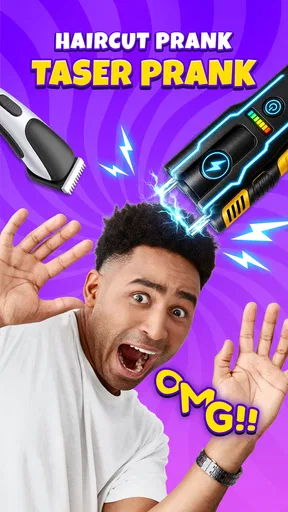
Another workable scenario is using the haircut-style effect during a staged video or a playful skit. The person involved can agree beforehand, and the sound can be timed as part of the performance. This is more reliable than trying to frighten a stranger, because everyone understands the context and can stop immediately if the effect is uncomfortable.
The taser and stun-gun themes require more care. Even when the app is only simulating an effect, the subject matter can be associated with fear, violence, or personal safety. I would not use those sounds in public transport, a workplace, a school, a security-sensitive building, or anywhere that another person might mistake the situation for a real threat.
The time-bomb theme needs similar judgment. A sound that is funny among close friends can be alarming in a public place. I would avoid airports, hospitals, government buildings, crowded venues, and any environment where people may reasonably interpret the sound as an emergency. The fact that the app is intended as a prank does not remove the responsibility to consider how it sounds to everyone else.
For users who cannot comfortably manage sudden interaction, a useful workflow is to make the activity predictable: explain what will happen, choose the sound together, and let the participant control when it starts. This turns the app from a surprise device into a shared sound-effects tool. It also makes the experience more inclusive without pretending that the app itself provides specialized support.
Where it compares well, and where another option wins
Compared with a standard ringtone or a single sound-effect file, this app is more convenient for browsing several prank themes in one place. I do not need to search through unrelated audio on my phone every time I want a different joke. The variety is the main reason to choose it over a basic sound player.
Compared with a full social game, however, it offers much less structure. There is no reason to expect extended progression, strategy, or a story from this type of experience. If I want an activity that keeps a group engaged for an hour, I would choose a party game instead. This app is better as a short interlude between conversations.
It also differs from video-prank tools. A video creator may want editing controls, recording, captions, and careful timing. This app is more immediate and less demanding, but that simplicity means it is not the right replacement for a production-oriented editor. Its value is in spontaneous playback, not in building a finished video.
Compared with a dedicated accessibility-focused audio app, it is also a narrower choice. Someone who needs adjustable presentation, carefully organized controls, or predictable non-startling feedback should look for an app designed around those needs. Here, the surprise factor is part of the entertainment, so it can conflict with a user’s sensory preferences.
One trade-off I noticed is that a large sound collection can increase choice while making decision-making slower. When I only want one quick effect, more options are not automatically better. I get the best results by treating the app as a prepared toolkit: pick a small group of appropriate sounds for the setting, then ignore the rest until another time.
Remaining barriers and responsible use
The biggest barrier is not technical; it is context. A person may be able to operate the app perfectly and still be unable to use it safely in a crowded or formal environment. The effects associated with electricity, weapons, or emergencies can be misunderstood. I consider location and consent more important than the cleverness of the prank.
Another barrier is the dependence on the phone’s audio experience. The result may be less effective in a noisy room, while high volume can make it intrusive or uncomfortable. I would test the sound privately first, then set a moderate level before using it with others. If the effect is difficult to hear without making it startlingly loud, I would skip it.
People with visual limitations may need extra time to locate controls, while people with motor limitations may prefer someone else to operate the phone. That is not a failure on the user’s part. It is simply a reminder that a playful app should not be judged only by whether it launches quickly. The best experience may involve shared control, verbal descriptions, or a preselected effect.
I also think the Everyone age label should be interpreted alongside ordinary supervision and good judgment. A content label does not mean every prank is suitable for every person or setting. Children may enjoy the novelty, but an adult should still guide them away from frightening strangers, public disturbances, and jokes involving people who cannot easily move away.
The app’s early version status also shapes my expectations. Version 1.0 suggests that I should approach it as a straightforward first release rather than a mature platform with a long list of refined controls. That is not automatically negative, but it makes me more willing to accept a basic presentation and less willing to expect advanced customization.
Because the price is free, the barrier to trying it is low. Still, free does not mean every user will find it worthwhile. If you dislike prank culture, avoid sudden sounds, or want a practical daily lifestyle assistant, there is little reason to choose this app. Its purpose is specific, and its usefulness depends almost entirely on whether that purpose fits your social habits.
Who I would recommend it to
I would recommend it to someone who wants a quick collection of playful sound effects for consensual jokes, casual gatherings, or simple skits. It is especially suitable for users who prefer opening one small app instead of collecting individual audio files. The range of themes gives it more flexibility than a single-purpose sound button, while keeping the experience easier than a full game.
I would recommend it less strongly to anyone seeking deep interaction. There is no reason to install it for long-term progression, serious communication, relaxation, or everyday organization. It is a novelty tool, and novelty tools are most satisfying when used briefly and with a clear occasion in mind.
For inclusive use, I would make three adjustments: choose the effect with the participant, keep the volume moderate, and avoid themes that could be mistaken for real danger. Those steps do more to improve the experience than trying to make the prank more surprising. They also let people with different sensory, motor, or communication preferences take part on their own terms.
My final impression is that this is a focused, free lifestyle app with a clear entertainment purpose. The collection of sounds is its practical advantage, while sudden audio, limited suitability for public spaces, and uncertain comfort across different users are its main constraints. I would keep it for friendly, agreed-upon moments rather than use it as a general-purpose app.
Overall, I think Taser Prank: Electric Stun Gun is worth trying if you specifically want a compact prank soundboard and understand the responsibility that comes with effects built around surprise. Its best audience is comfortable with playful audio and willing to adapt the joke to the people and place involved. For everyone else, a calmer sound-effects app, a structured party game, or an accessibility-focused audio tool will probably be the better choice.
Pros
- Simple controls make the prank effect quick to activate.
- Vibration and sound effects add realism during demonstrations.
- Works well for short
- casual entertainment with friends.
- Lightweight app that is easy to open and use.
- Does not require special accessories or setup.
Cons
- The prank can startle people and may cause unnecessary panic.
- Repeated sound effects can become annoying quickly.
- Realism is limited compared with an actual stun device.
- May contain ads that interrupt the user experience.
- Not suitable for children without adult supervision.
FAQs for Taser Prank: Electric Stun Gun
What is Taser Prank: Electric Stun Gun, and how does it work?
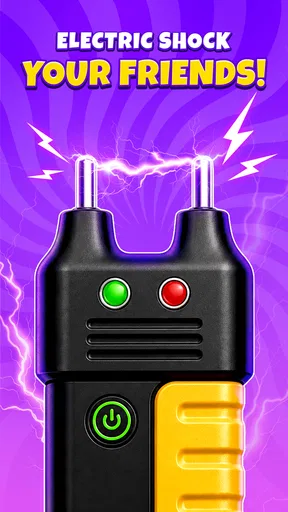
Taser Prank: Electric Stun Gun is a simulated electric stun-gun app designed for entertainment and practical jokes. It uses your phone’s screen, sound effects, and sometimes vibration or flashing visual effects to create the impression of an electrical device. It does not generate electricity, stun anyone, or function as a real self-defense tool. The experience is entirely digital and intended for harmless play.
Can Taser Prank: Electric Stun Gun actually shock or hurt someone?
No. The app cannot produce an electric shock and does not contain hardware capable of stunning, disabling, or physically affecting another person. Any apparent zap is created through animations, sounds, and optional vibration from the smartphone. Even so, pranks should be used responsibly: avoid startling people who may panic, have medical concerns, or dislike loud noises and flashing effects, and always obtain consent when appropriate.
Is Taser Prank: Electric Stun Gun safe to download and use?
As with any prank or simulation app, safety depends on downloading it from a trusted official store and reviewing the permissions requested during installation. The app itself is intended to be harmless, but loud audio, vibration, or flashing visuals may be uncomfortable for some users. People sensitive to flashing lights, children, pets, or individuals with certain medical conditions should be kept away from potentially startling demonstrations.
Does the app require special permissions, an internet connection, or additional equipment?
The basic experience generally relies on the phone’s display, speaker, and possibly vibration motor, so no special physical equipment is needed. Depending on the version and platform, it may request permissions related to sound, vibration, or notifications, while some features may work offline. Before installing, check the store listing and privacy information carefully, since permissions, advertising, and connectivity requirements can change with updates.
Is Taser Prank: Electric Stun Gun a real self-defense device?
No. Taser Prank: Electric Stun Gun is only a joke or simulation application and must never be treated as a substitute for a legal self-defense product. It cannot stop an attacker, deliver an electrical charge, or contact emergency services automatically. If you are looking for personal protection, research lawful safety options in your area, learn basic prevention techniques, and contact emergency services whenever you face immediate danger.


